
Antonio Cruz has been diabetic since 1996. Unaware that his condition could put him at risk of developing a sight-threatening condition, he disregarded undergoing comprehensive eye checkups every year. Early this year, he started seeing black strings or cobwebs floating across vision (floaters) in his left eye. Upon having his eyes checked, he found out that that he was suffering from diabetic retinopathy.
Diabetic retinopathy is common complication of diabetes. A potentially blinding eye condition, it can develop in both eyes and affect the retina, the part of the eye that “takes the picture” and then sends the images to the brain.
According to Dr. Amadeo Veloso, Jr., Retina and Vitreous Disease Specialist of Asian Eye Institute, “The longer you have diabetes, the higher your chances of having it. Diabetic patients are more likely to suffer from this condition if they have had diabetes for at least 10 years, have poor control of blood sugar, blood pressure and cholesterol, are pregnant, and are smokers.”
Diabetic retinopathy has two types – non-proliferative and proliferative. Non-proliferative is the most common retinopathy. It occurs when blood sugar causes blood vessels to get weak, leading these blood vessels to leak blood or other liquid in the retina.
Proliferative cases, on the other hand, are the advanced stage. If blood sugars remain high, the eyes attempt to grow new blood vessels. These blood vessels don’t develop properly, so they are weak and can leak blood easily. This is what causes changes in vision.
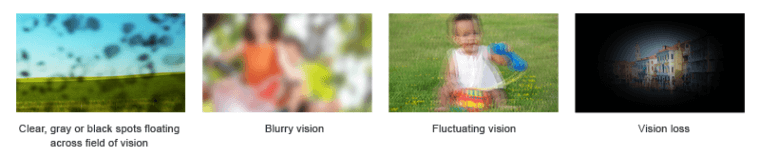
Diabetic retinopathy does not manifest any signs or symptoms at its early stages. As it progresses, patients may experience seeing clear, gray or black strings floating across vision (floaters). They may also have blurry or fluctuating vision, or impaired colored vision or loss of vision.
Anyone with diabetes could suffer from diabetes retinopathy, but poor control of blood sugar, blood pressure and cholesterol puts them at higher risk. If you are pregnant or a smoker, you could also develop this condition. Unfortunately, there is no cure for diabetic retinopathy. Treatments for diabetic retinopathy are aimed at slowing down its progression and preventing vision loss.
Dr. Veloso explains, “In Mr. Cruz’s case, he has been suffering from diabetes for over 10 years. He’s also had difficulty controlling his sugar intake. Good thing was we were able to detect his condition early. We were able to give him injections to prevent sight damage.”
Dr. Veloso strongly recommends for patients with diabetes for more than 10 years to have their eyes screened every year. “Early detection and timely treatment can protect their vision. Since diabetes is a lifelong condition, there is always a possibility of retinal damage and vision loss. The only way to keep their vision is if they make lifestyle changes – make sure they control their blood sugar and blood pressure, eat healthy and quit smoking.”