(02) 8-898-2020
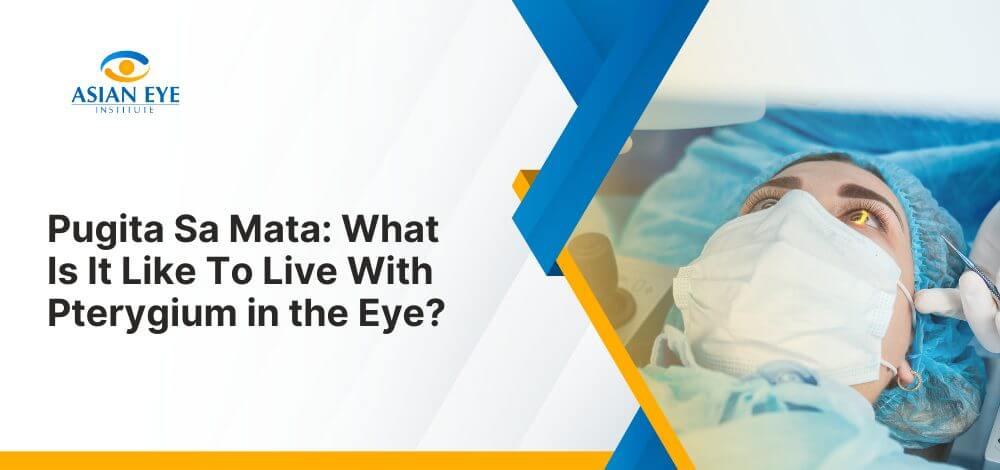
Pterygium is an eye condition characterized by the appearance of fleshy and triangular tissue on the side of the eye. The growth typically extends from the sclera (the white part of the eye) to the cornea (the transparent and bulging area that covers the iris and pupil).
In the Philippines, pterygium is called “pugita sa mata,” possibly because its triangle shape vaguely resembles the marine animal. Pterygium can look very alarming, but it is not a dangerous condition. In many cases, people can leave the growth as is without experiencing any problems. However, there are also instances when it must be removed surgically.
Asian Eye Institute is here to help you if you have pterygium in the eye. You may consult our doctors to learn if you can leave the growth there or if surgery is needed to remove it. We have also prepared this article to give you an idea of what it feels like to live with pterygium.
Pterygium operation is the only way to remove this eye condition. However, many people choose not to undergo this procedure because the growth is benign and barely affects their day-to-day lives. If you want to go this route, there are a few things to consider, including:
Although pterygium is not harmful in most cases, the appearance of the fleshy growth can still have some negative emotional impact on people with this condition. Every person has unique experiences, but others are deeply bothered by their eyes’ appearance. It affects their self-image, making them feel less confident with the way they look and more conscious of how others perceive them.
If you decide to leave the pterygium in your eye as is, you might have to make a few lifestyle adjustments. Here are some things you might need to do:
Pterygium surgery is the only way to remove the fleshy growth in your eyes. Here are a few things you need to learn about this procedure:
Surgery is not always necessary, however, these are some reasons for the surgical removal of pterygium in the eye:
Pterygium surgery takes about 30 minutes or less, depending on the appearance of your pterygium. Here are the steps that will be taken during the procedure:
As part of your postoperative care after pterygium surgery, you might have to wear an eyepatch for a few hours after the surgery. You will also have to apply eye drops to the affected eye for a couple of weeks or months, depending on the observation of your doctor. These drops are necessary to prevent any problems, like inflammation or infection.
It is essential to follow the post-operative care instructions given by your doctor. Doing so helps prevent complications and makes recovering and healing easier. Be sure to attend follow-up appointments with your doctor so they can monitor how well you are recovering from the operation. If you feel pain after pterygium surgery, do not hesitate to tell them immediately.
Asian Eye Institute is here to provide ways to manage pterygium in the eye. By consulting our doctors, you will be more informed about your condition, so you can decide better if you want to remove it or not. If you wish to speak with our specialists, you only have to schedule an appointment through our online channels or mobile and landline numbers. Our staff members will be more than happy to assist you.
Pterygium, or “pugita sa mata,” is a benign growth in the eye. Mild pterygium barely causes any problems, so it is usually fine to observe it. However, in some cases, surgery is necessary to remove it.
Our doctors here at Asian Eye Institute are willing to help you. Schedule a consultation today with our pterygium specialist, Dr. Sharlene Noguera.
We deliver to all our patients the highest quality eye care on a par with the best in the world. We make high-quality eye care available and accessible to the Filipinos. We advance the science and practice of ophthalmology and optometry in Asia and the Pacific Rim.
HELPFUL LINKS
CONTACT US
0917-181-2020 /
0917-191-2020
(02) 8-898-2020
Monday – Friday
8:00 A.M to 5:00 P.M