
(02) 8-898-2020
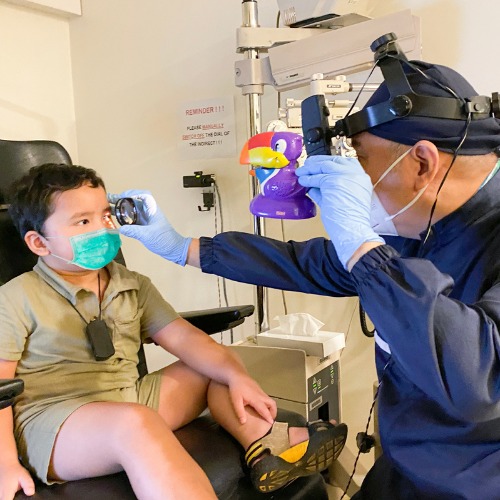
Strabismus happens when the eyes are wandering or not looking at the same direction.
One eye looks straight ahead, while the other eye turns inward (cross-eyed or pagkaduling) or outward (wall-eyed or pagkabanlag). While pagkaduling at pagkabanlag are the most common ones, there are cases where the other eye may turn upward (hypertropia) or downward (hypotropia).
According to Asian Eye Institute Pediatric Ophthalmologist and Adult Strabismus Specialist Dr. Norman Fajardo, strabismus is a common eye condition in children. However, this can also affect adults.
How does this happen?
Dr. Fajardo explained that there are six muscles for each eye that control the movements and alignment of the eyes. “These muscles are attached to the outside of the eye and are controlled by the brain. All these muscles should work and move together – to the left, right, up and down. If there is one or two muscles that don’t move well, strabismus may develop.”
Aside from eye muscles, it’s also be associated with an uncorrected high refractive error. “Refractive errors are eye conditions that cause blurred vision and are commonly corrected by wearing prescription eyeglasses. The three types are nearsightedness, farsightedness and astigmatism. Kids with high and uncorrected farsightedness may suffer from strabismus,” he added.
Previous eye injuries; eye problems that result in poor vision like cataracts; disorders that affect the brain, such as cerebral palsy, down syndrome and stroke may also put you at risk of this eye condition.
What are the warning signs?
Parents are strongly urged to observe their children and be proactive when it comes to their children’s eye health. Dr. Fajardo said, “Most kids don’t complain about what they are experiencing because they think it’s normal. They think having blurred vision is normal because they can’t compare it with their friends’ or siblings’ vision, or they don’t have any alternative experience to relate it with.”
The main sign of strabismus is the misalignment of the eyes. Those with less obvious misalignment, they’re likely to experience double vision, headaches and eye strain. These can make it uncomfortable to read.
What do parents need to do?
When parents start to notice signs and symptoms, it’s best to get the child’s eyes checked by a pediatric eye specialist. “Around 80% of children’s learning is through their vision,” he shared, “So the main goal is to protect their vision to aid their learning and development. So when we detect and treat it early, their treatment is likely to be more successful. We’re also able to prevent complications like problem in depth perception or 3D vision and even lazy eye.”
He added, “Some people think lazy eye and strabismus are the same. But lazy eye happens when one or both eyes have poor vision despite wearing glasses. If left untreated, the brain will favor the eye with better vision and ignore the images seen by the weaker eye.”
Checkup and treatment for strabismus
A routine comprehensive eye exam will ensure they have clear, healthy vision. It is important to get their eyes screened at 6 months old and get checked at 3 years old or before they start going to school. We can also do an initial consultation through Teleconsultation, especially now that there’s an ongoing pandemic. A test called Hirschberg test can also be conducted at home. “It’s a light reflex test to quickly check the child’s eye alignment. Parents don’t need to worry about it because we will be guiding them how to do it,” Dr. Fajardo said.
Patients with strabismus may be recommended to wear prescription eyeglasses or eyeglasses with prisms, or undergo active vision therapy or eye muscle surgery. hese treatments focus on improving eye alignment and coordination.
Need to get your child’s eyes checked? Asian Eye has pediatric eye and adult strabismus specialists, and has clinics in Rockwell Makati, Trinoma, Mall of Asia and Commercenter Alabang. Book a comprehensive eye checkup at 8898-2020 or [email protected]. You may also try our Teleconsultation Service by calling or texting 0917-800-9103.
We deliver to all our patients the highest quality eye care on a par with the best in the world. We make high-quality eye care available and accessible to the Filipinos. We advance the science and practice of ophthalmology and optometry in Asia and the Pacific Rim.
HELPFUL LINKS
CONTACT US
0917-181-2020 /
0917-191-2020
(02) 8-898-2020
Monday – Friday
8:00 A.M to 5:00 P.M