
(02) 8-898-2020
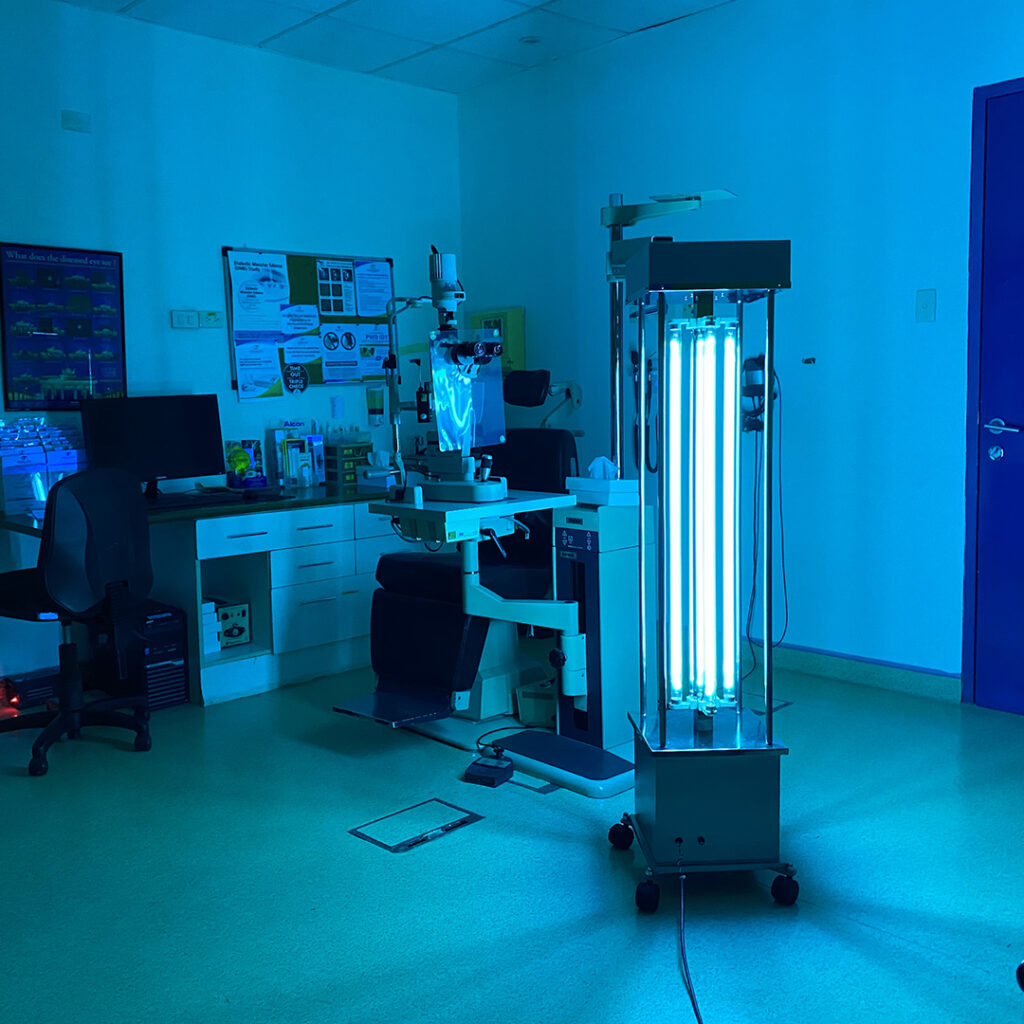
Alcohol, disinfectant products and cleaning chemicals have been the top tools to help keep COVID-19 at bay. However, these days, people have also started using germicidal or ultraviolet (UV) lamps to disinfect their deliveries, homes and offices.
According to Asian Eye Corneal and External Disease Specialist Dr. Sharlene Noguera, UV lamps have been commonly used even before COVID-19 happened. “UV lamps are usually used in settings, such as clinics and hospitals, where disinfection is a primary concern. These lamps generate energy that are very effective in destroying the ability of bacteria and viruses to exist multiply.”
But can UV lamps harm your eyes?
“There are three types of UV rays,” Dr. Noguera explains, “The most common ones are the UVA and the UVB, which you would get from sun exposure. Excessive exposure to UVA and UVB can lead to cataracts, age-related macular degeneration and even eye growths like pterygium and pinguecula.”
But what about UVC? UVC could be considered the most dangerous among the three. We typically don’t receive a lot of UVC radiation because the ozone layer absorbs it. That is why we are only exposed to it through artificial sources like UV lamps. “Exposure to UV lamps can cause many problems like respiratory and skin irritation. It can also cause eye damage. While it takes years to develop eye problems caused by UVA and UVB, it only takes seconds with UVC,” she adds, “When you are exposed to UVC, the outer parts of the eye absorb the UV radiation immediately, causing a temporary but painful inflammation called photokeratitis.”
Photokeratitis affects the cornea, the clear front layer of the eye, and conjunctiva, the clear tissue that covers the white part of the eye (sclera). Often compared to a sunburn, photokeratitis the person does not realize it until the damage has occurred. “When they do, they may experience feeling like there’s sand in their eyes, eye redness, blurry vision, tearing, swelling, sensitivity to light, seeing halos, twitching of the eyelid, or worse, temporary vision loss,” she says.
The eyes typically recover from the conditions within a few days, but it’s important to get a comprehensive eye exam to determine how much damage was done. “It’s also important to determine whether any intervention needs to promote healing and ensure that their eyes are protected. They may be prescribed with eye medicine or pain relievers, and be advised to avoid rubbing their eyes. Contact lens wearers should also avoid wearing contacts during their recovery.
The World Health Organization (WHO) has warned the public that UV lamps should not be used to sterilize their hands or other parts of the body. Dr. Noguera cautions, “There are proper ways to use UVC lamps safely and correctly. If you are using a UVC lamp to disinfect a room, use the timer to give yourself enough time to leave before the lamp starts operating. If you need to enter the room, you should protect your eyes and skin by wearing UV-protective goggles or face shield, gloves and a coat without gaps between the cuff and glove.”
Need to undergo a comprehensive eye exam? Asian Eye Institute has clinics in Rockwell Center, Makati; TriNoma; Mall of Asia; and Commercenter Alabang. Book your appointment via 8-898-2020 or 0918-898-2020 or email us at [email protected].
We deliver to all our patients the highest quality eye care on a par with the best in the world. We make high-quality eye care available and accessible to the Filipinos. We advance the science and practice of ophthalmology and optometry in Asia and the Pacific Rim.
HELPFUL LINKS
CONTACT US
0917-181-2020 /
0917-191-2020
(02) 8-898-2020
Monday – Friday
8:00 A.M to 5:00 P.M