
(02) 8-898-2020
Published on: December 14, 2021
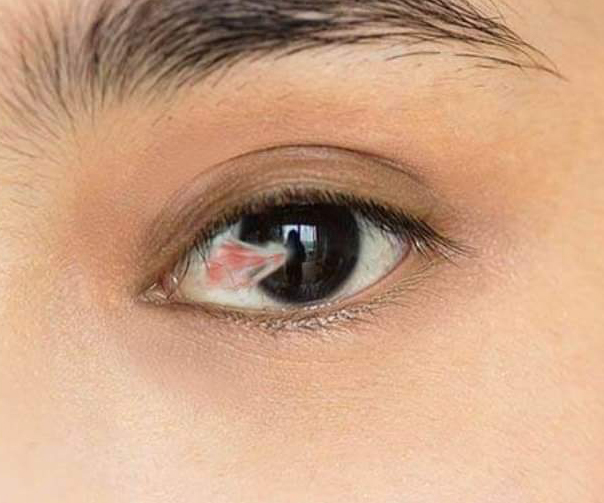
Do you have a fleshy growth on the white of your eye that seems to be growing across your cornea? Does it constantly feel a little itchy or like there is something stuck in your eye? You might have pterygium.
Pterygium, more commonly known as pugita in Filipino, is often characterized by pink, fleshy tissue on the white part of the eye. It usually starts to grow from the corner of your eye and eventually covers the cornea. The cornea is the clear, dome-shaped surface on the front of the eye.
According to Asian Eye Institute Cornea and External Disease Specialist Dr. Sharlene Noguera, pterygium is likened to an octopus or pugita because of its shape. It can often look like an octopus growing on the eye. “Sometimes, it can grow so big that it can obstruct your vision. You may have a hard time seeing and doing your daily tasks, and it can also distort the shape of your cornea, leading to astigmatism.”
Astigmatism is a type of refractive error. Because of pterygium, the normally even round shape of the cornea becomes imperfect, causing blurry vision whether you are reading from your mobile phone, on a desktop or looking far while driving.
Usually linked to prolonged sun exposure, pterygium often develops in people who live in tropical climates like the Philippines and are often exposed to ultraviolet (UV) rays. Dr. Noguera shares, “This condition is more likely seen in men between 20 to 40 years old and those spend a lot of time outdoors, such as farmers, fishermen, welders, traffic enforcers, construction workers, surfers and seafarers.”
The primary source of UV rays is the sun. However, it can also be reflected off surfaces like water, sand and streets. There are also artificial sources like tanning beds and welding machines.
“Patients with pterygium usually experience eye redness, excessive tearing, eye dryness and itching,” she says, “Some would even complain of feeling like having sand in their eye. To relieve them of these symptoms, we would recommend them to use eye lubricants or artificial tears. Those in advanced cases may undergo surgery, so they can continue to be productive.”
In some cases, pterygium recurs. A procedure called conjunctival autograft can be done to prevent this from happening. This procedure has been proven safe and effective in removing the growth and markedly decreasing its chance from recurring.
Since the Philippines is a tropical country, Dr. Noguera advises patients to always protect their eyes from the sun and other sources of UV rays. “Make sure to wear a pair of UV-protected eyewear. Aside from sunglasses, UV-coated contact lenses or prescription glasses are now available. This ensures that your eyewear can block 100% of UV rays. Get it from a reputable shop, and wear it even on cloudy days.”
It also pays to consider the setting, altitude and time when going out. She adds, “UV rays are stronger between 10AM to 2PM. UV levels are also greater in high places like mountains and those with wide open spaces like beaches. If you must go out during these times or will go to these places, make sure your eyes are protected.”
A yearly visit to your ophthalmologist will also be good to monitor the condition of the eyes. She explains, “There are a lot of eye conditions that don’t have early warning signs. Early cases of pterygium must also be monitored.”
Good news! Get 20% off on pterygium removal when you undergo surgery within two (2) weeks after your comprehensive eye exam. Asian Eye is located at Phinma Plaza in Rockwell Center, Makati with satellite clinics in TriNoma, Mall of Asia and Commercenter Alabang. For more information, call us at 898-2020 or email us at [email protected].
Click the link to learn more about our current promos and discounts.
We deliver to all our patients the highest quality eye care on a par with the best in the world. We make high-quality eye care available and accessible to the Filipinos. We advance the science and practice of ophthalmology and optometry in Asia and the Pacific Rim.
HELPFUL LINKS
CONTACT US
0917-181-2020 /
0917-191-2020
(02) 8-898-2020
Monday – Friday
8:00 A.M to 5:00 P.M