(02) 8-898-2020

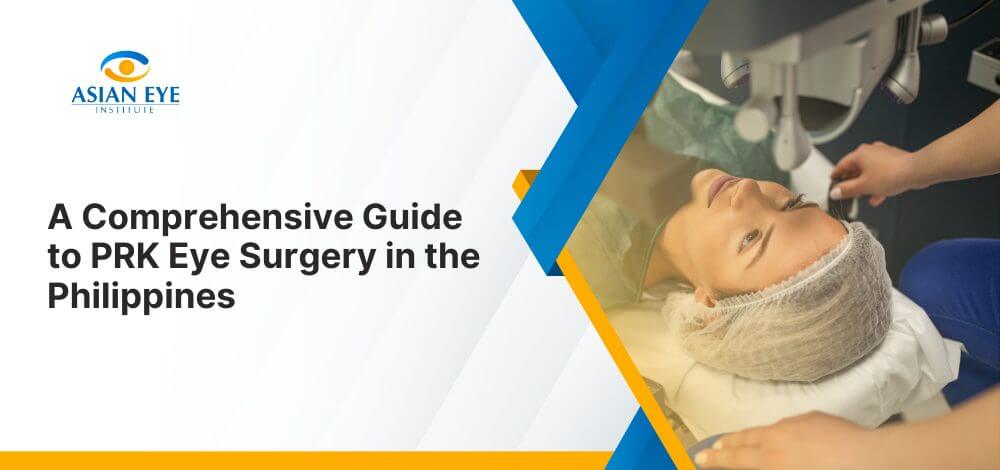
A Comprehensive Guide to PRK Eye Surgery in the Philippines

Introduction

When it comes to improving vision, there have been many breakthroughs over the years that helped people see clearly again. Of course, eyeglasses and contact lenses are still some of the most common vision correction methods, and they remain popular because they are affordable, effective, and easy to use. But over the years, several remarkable improvements in eye care have emerged; surgical procedures are now available for people who want to bid farewell to their visual aids permanently.

Laser-assisted surgery is becoming a widely known practice to correct refractive errors, including astigmatism, nearsightedness (myopia), and farsightedness (hyperopia). Today, many kinds of laser-based procedures are available, and one of them is PRK, which you can get only from the most reliable eye care providers.

It is an incredibly safe and effective vision correction method, and we offer it here at Asian Eye Institute. However, if you wish to learn more about PRK laser eye surgery in the Philippines, reading this article will help. Below, we have summarized everything you need to know about this procedure, including its benefits, effectiveness, and costs.


What Is PRK Eye Surgery?

Photorefractive keratectomy (PRK) surgery is designed to adjust the shape of the cornea to correct refractive errors. It is also a laser-based surgery that has gained widespread recognition because of how effective and safe it is in enhancing patients’ eyesight. 

Here are a few things you need to know about PRK in case you plan to get it to have your refractive error corrected:


Conditions Treated

PRK is for refractive errors. However, strictly speaking, these eye conditions cannot be “treated” but can be corrected. Refractive errors usually stem from irregularities in the shape of the eyeballs, preventing light from being properly focused onto the retina.

Refractive errors are common in the Philippines, affecting people of all ages. The most affordable and arguably easiest solution is to get eyeglasses or contact lenses fitted on the patient, but if you no longer want to rely on these visual aids, undergoing PRK is one of your options.


Benefits

Eye doctors and specialists recommend PRK to some of their patients because they see how beneficial it can be. Here are a few of its known advantages:

  • Permanent Vision Correction – With PRK, you can expect a lasting solution to your eyesight problems. Reshaping the cornea is a permanent solution to refractive errors, eliminating your need for eyeglasses and contact lenses.
  • Quick Recovery – Patients who undergo PRK surgery can experience significant and positive changes to their vision in days. They will feel discomfort and pain for some days, but generally, patients can expect a full recovery in just a few months.
  • Safe and Effective – PRK is approved by the US Food and Drug Administration (FDA), so you can expect it to be generally safe. It also has an incredibly high success rate, providing you with a better chance to have your vision improved after a full recovery.


Procedure

Before you undergo PRK surgery, your doctor will first determine your eligibility. Several tests will be conducted to determine whether you are suitable for the operation. During the procedure itself, this is what is likely to happen:

  1. Administration of Anesthesia – Your doctor will numb the area around your eyes to prevent you from feeling pain or discomfort during the procedure. They will also use an eyelid holder to keep your eyes open and in place.
  2. Removal of the Epithelium – The outer layer of the cornea (also called the epithelium) will be removed. Your doctor will use an instrument or brush to perform this step.
  3. Reshaping of the Cornea’s Surface – Laser beams will then be used to reshape the cornea’s surface. Advanced computer programs will assist your doctor in improving the procedure’s accuracy and effectiveness. 
  4. Placing of Bandage Contact Lens – The procedure does not take long, lasting less than five minutes in each eye. Once done, your doctor will place a bandage contact lens on the area of the surgery to help your eyes heal faster.


Who Are the Candidates for PRK Eye Surgery?

Sadly, not everyone is suitable to undergo PRK laser eye procedure in the Philippines. Your doctor is the one who can tell you if you are eligible, but you have a high chance if you belong to these groups of people:

People With Refractive Errors

PRK is advanced, but it can only correct refractive errors within a certain threshold. If your myopia, hyperopia, or astigmatism is too mild or too severe, you might no longer be eligible for PRK surgery.

For myopia, the range is between -1.0 and -10.0 diopters. The range for hyperopia is narrow; the surgery only applies between +1.0 and +6.0 diopters. Your astigmatism, meanwhile, should be below 4.0 diopters to be suitable for PRK surgery.


Those With Stable Eye Health

Your doctor will also check your overall eye health. You will only be eligible for the surgery if it is determined that your vision is stable, which means that your eyes have already fully developed and your eye grade has not change over the past year. Age is usually a determinant, so PRK is not suitable for people below 18 whose eyes are highly likely to be still developing.  


Individuals With an Active Lifestyle

Eyeglasses and contact lenses are quite effective in correcting refractive errors. But we must admit it: they can be inconvenient sometimes, especially for those with an active lifestyle. How many times have you forgotten or misplaced your glasses or contact lens case? And how many times have you accidentally broken or torn them while performing strenuous activities or engaging in a contact sport?

If you no longer want to experience such problems, PRK is an option. They can help you completely eliminate the need for glasses or contact lenses if the surgery goes well.


Is PRK Surgery Expensive in the Philippines? 

The cost of PRK laser eye surgery in the Philippines is affected by several factors. Indeed, the procedure can be expensive, but there are many ways to save a bit or at least avoid shelling out a large amount of cash in one go.

You can use your insurance from a private HMO, which is an effective way to cut a significant amount from the total cost of the surgery. Just be sure that you are updated on your monthly payments to avoid problems when claiming your benefits.

You can also settle your hospital bills using your credit card to eliminate the need to shave off a large sum of money from your savings. Once done, you can pay your bank via monthly or quarterly installments, which can be more economical in the long run.


Where Can You Get PRK Eye Surgery in the Philippines? 

PRK eye surgery can only be performed by qualified doctors. You can find them here at Asian Eye Institute. We are among the country’s most trusted eye care providers, so you can rest assured that you are in good hands if you rely on your ophthalmologists. Apart from our highly skilled doctors, we are also proud to have state-of-the-art facilities and equipment that can help improve our eye care services to patients like you.

Are you planning to schedule a consultation with us? You can do so by completing our online form and submitting it electronically. Once done, you will receive confirmation via email in just a few business days. Alternatively, you can contact us through our mobile and landline numbers so our staff can help you set up an appointment with our doctors.


Other Frequently Asked Questions About PRK Surgery 

How Does PRK Differ From LASIK?

PRK and LASIK (short for laser-assisted in situ keratomileusis) are laser-based procedures, but they are different. LASIK does not necessarily involve removing the epithelium to access and reshape the cornea’s surface. Instead, a small flap will be created so laser treatment can be done to change the shape of the cornea as desired.

The flap will be placed back after the procedure. LASIK is believed to have a faster patient recovery time since the epithelium will not be removed. However, the downside is that the surgery only applies to some people with thicker corneas.


Do You Still Need To Wear Glasses After PRK Surgery?

After PRK surgery, patients achieve 20/20 vision, so they no longer have to wear glasses or contact lenses. However, keep in mind that many factors can affect the procedure’s overall result. Some no longer need visual aids for daily activities but still use glasses when doing close-up work and other related tasks. 


What Happens if You Rub Your Eyes After PRK?

After undergoing PRK surgery, your doctor will inform you how to care for your eyes while they heal. One of the things they will tell you is to never rub your eyes, no matter how itchy they get. Rubbing your eyes can slow your recovery because the cornea’s surface is still pretty delicate, especially if it has only been a few days after the operation.

However, it is normal to feel discomfort right after the procedure. When your eyes feel itchy, use the eye drops prescribed by your doctor instead. 


Conclusion

PRK eye surgery is available to patients in the Philippines who want to correct their refractive errors permanently. It is a safe and effective procedure, and we offer it here at Asian Eye Institute. 

For more information about PRK surgery or any other eye care services, contact our team. Our lines are always open, and our staff members will be more than willing to provide you with any assistance you might need. 


Other Topics That You Might Like

Asian Eye’s Dr. Robert Ang Wins Gold Medal at Cataract Olympics

At the recent American Society of Cataract and Refractive Surgery (ASCRS) Annual Meeting on April 8, 2024, Dr. Robert Ang of Asian Eye was awarded a prestigious Gold medal in the Cataract Olympics for his video presentation titled “Cataract Technology Hurdles.”  

Held in Boston, Massachusetts, USA from April 05 to 08, 2024, the annual meeting featured the participation of outstanding ophthalmologists and eye care professionals from across the globe. The Cataract Olympics symposium provided a platform for teams from leading organizations such as ASCRS, APACRS, ESCRS, and LASCRS to showcase their expertise and compete in various cataract categories making Dr. Ang’s achievement even more remarkable.

Dr. Ang’s award-winning video focused on the critical aspect of astigmatism correction during cataract surgery and offered valuable insights into using Toric (astigmatism) IOLs. His impressive win coincides with Cataract Awareness Month this June, a time dedicated to raising awareness about cataracts and educating the public about available treatment options.

This video competition not only showcases the expertise and skills of specialists like Dr. Ang but also provides a platform for sharing knowledge and exchanging ideas with doctors worldwide regarding new technologies and surgical techniques. By leveraging the power of visual media, these educational resources help advance the field of cataract surgery and benefit patients globally.

Cataracts are an age-related eye condition, where the normally clear lens of the eye becomes cloudy. Sometimes, it feels like looking at a fogged-up glass. If not treated, it can lead to blindness. Fortunately, surgery can be done to remove it. The ophthalmologist will remove the lens with cataract and replace it with an IOL. There are different kinds of IOLs available, all designed to improve vision. 

Asian Eye takes great pride in the exceptional skills and expertise of their esteemed medical team, exemplified by the contributions of Dr. Robert Ang. Dedicated to providing patients with the highest standard of care, patients can have peace of mind when it comes to cataract surgery and other vision-related procedures at Asian Eye. 

For more information about Dr. Robert Ang and the advanced ophthalmological services offered at Asian Eye, please visit www.asianeyeinstitute.com.

Cataract Awareness Month: Reclaim Your Freedom, Restore Your Sight

June is Cataract Awareness Month, and as a leading eye center in the Philippines, Asian Eye aims to celebrate and raise awareness about the importance of cataract screenings and drive more individuals to seek timely treatment for cataracts. Cataracts are a common concern among older Filipinos and one of the major causes of visual impairment. According to the Philippine Eye Research Institute, there are 1.18 million people suffering from cataracts, with roughly 400,000 needing surgery.

Cataracts are the clouding of the eye’s natural lens, which can lead to symptoms such as blurry vision, difficulty seeing at night, and increased sensitivity to glare. It can lead to blindness if left untreated, so it’s essential to have them removed when they begin to interfere with your daily activities, such as driving, watching TV, or cooking.

Cataract surgery is a common procedure that involves removing the cloudy natural lens and replacing it with an artificial intraocular lens. Laser cataract surgery offers several advantages over traditional surgery, and Asian Eye is proud to offer patients with cutting-edge solutions for their eye care needs.

Asian Eye utilizes VICTUS Femtolaser technology from the renowned German brand Bausch + Lomb. This advanced technology is able to break up and remove the cloudy lens using significantly less energy, minimizing the risk of damage to surrounding tissues and promoting quicker healing.

Regular visits to your eye doctor are paramount, as they can advise you on the timing of the surgery and explain the benefits and risks involved. If you have an elderly loved one who complains of cloudy or blurry vision, consider giving them the gift of sight with the following Cataract Screening and Surgery deals:

40% off for one (1) cataract screening

50% off for two (2) or more cataract screenings

20% off on cataract surgery

*if scheduled within one (1) week after the screening or deposit is given within (2) weeks

It’s important to make informed decisions with a trusted eye care specialist and to book an appointment with Asian Eye to take proactive steps towards better vision and eye health.

Asian Eye Institute is located at Phinma Plaza, Rockwell Center, Makati with satellite offices located in TriNoma, Quezon City, and Mall of Asia, Pasay City. For inquiries and appointments, you may call 8898- 2020 or send an email to [email protected].


Dr. Robert Ang Recognized as one of the Top 100 in “The Power List 2024” by The Ophthalmologist

Dr. Robert Edward Ang, a distinguished specialist in Cataract, Glaucoma, and Cornea and Refractive Surgery (LASIK) at the Asian Eye Institute, has been honored once again by The Ophthalmologist Magazine in its prestigious 2024 Power List as one of the top 100 most influential eye care professionals in the world. Dr. Ang, notably the only Filipino listed, reaffirms his status with this second recognition. The first time he was listed in the top 100 was in 2018, highlighting his sustained contributions and leadership in the global ophthalmology community.


About Dr. Robert Edward Ang

As the Director of the Cornea and Refractive Surgery Service at the Asian Eye Institute, Dr. Ang is celebrated for his expertise in LASIK surgery and his pioneering research on technologies that enhance the diagnosis and treatment of various eye conditions. As the Director for Research and Training, his collaborative work with leading pharmaceutical and medical device companies has led to innovations in cataract intraocular lenses, presbyopic laser treatments, and minimally invasive glaucoma devices.

His accolades include multiple Best Paper of Session Awards from the American Society of Cataract and Refractive Surgery (ASCRS), the Certified Educator Award from the Asia Pacific Association of Cataract and Refractive Surgery (APACRS), the Presidential Recognition Award from the International Society of Refractive Surgery (ISRS), the Geminiano de Ocampo Outstanding Researcher in Ophthalmology Award from the Philippine Academy of Ophthalmology (PAO) and the Senior Achievement Award from the Asia Pacific Academy of Ophthalmology (APAO).

Dr. Ang’s consistent recognition on such a significant global platform not only underscores his dedication and skill but also serves as an inspiration to current and aspiring ophthalmologists worldwide. His achievements continue to showcase the excellence and innovation present in Philippine medical practices.


Explore and Connect

Dr. Robert Ang has ongoing research projects on cataract, glaucoma, refractive lenses and laser eye surgery. To learn more about Dr. Ang’s impactful work and explore if, as a patient, you would like to be part of the pioneering research and eye care services at the Asian Eye Institute, please visit our website at asianeyeinstitute.com. For appointments, please refer to the contact details below:


ROCKWELL (Main Clinic)

8th, 9th, and 10th Floors, PHINMA Plaza

Rockwell Center, Makati City

LANDLINE (02) 8-898-2020

MOBILE 0918-898-2020

EMAIL [email protected]

Set an In-Person Appointment

Book a Teleconsultation

Find Our Clinics

Privacy Policy

Asian Eye Institute Inc., including its affiliates and subsidiaries place a premium on the confidentiality of personal data.
Please read the Asian Eye Institute Privacy Policy to understand how Asian Eye uses and protects your cookies and personal data in accordance with the Data Privacy Act of 2012, its Implementing Rules and Regulations, other issuance of National Privacy Commission, and other relevant laws of the Philippines.
By continued use, you accept our use of cookies and agree to our privacy policy.