According to research, 80 to 85% of what we perceive comes from our sense of sight. Many would consider sight as the most important of the senses since we heavily rely on it to interact with our surroundings, perform everyday tasks, and do numerous activities. There is no doubt that clear vision is valuable.
The blurring of vision can be managed depending on the cause. Glasses or contact lenses may be helpful, but some may need to undergo procedures, and in others, the blurring is irreversible. Getting the correct diagnosis and timely treatment are critical to achieving good eye health, and these can only be achieved through a complete eye checkup.
If you are experiencing blurring of vision that can be corrected by glasses or contact lenses, you may be a good candidate for LASIK. LASIK stands for laser-assisted in situ keratomileuses. This refractive procedure treats errors of refraction such as nearsightedness, farsightedness, and astigmatism. This can help you achieve freedom from your glasses or contact lenses, making life easier.
Asian Eye Institute is one of the leading institutions performing LASIK surgery in the Philippines. Rest assured that you’ will be in the hands of the best eye doctors and surgeons if you choose us as your partner on your journey to clear vision. To schedule an initial consultation, you can simply set an appointment with us through our website.
Modern LASIK surgeries are done using a femtosecond laser to make a partial-thickness corneal flap. This means higher precision and accuracy. Using a femtosecond laser offers greater control and predictability, leading to a quicker and safer procedure that minimizes the risks of complications. After the flap is formed, an excimer laser is used to ablate the cornea according to the visual correction needed.
The procedure can be done in as fast as 10 to 15 minutes per eye, with the excimer laser ablation treatment lasting only a few seconds. LASIK is painless as the doctors use numbing eye drops. A mild sedative is also given to help patients relax. All you have to do is stay calm, listen to the doctor’s instructions, and focus on the light.
LASIK surgery is an effective procedure that can treat several eye conditions. If you are experiencing blurry vision, frequent eye strain, and unusual eye sensitivity, it is best to consult an eye doctor from Asian Eye Institute. Here are some eye problems that LASIK surgery can treat:
Nearsightedness or myopia is one of the most common eye conditions experienced by people. With this condition, you can see things clearly when they are near you, but items placed farther away get blurry or unrecognizable.
The reason things get blurred when they are far away is because your eyes are longer than normal, or your cornea (the clear front layer of the eye) is steeply curved. This makes light focus in front of the retina (the inner surface of the back of the eye that processes images) instead of on it, making faraway objects look blurry.
Nearsightedness can be treated temporarily by wearing prescription glasses and contact lenses. However, if you want to obtain 20/20 vision, you may opt to get LASIK surgery.
Farsightedness or hyperopia is the opposite of nearsightedness. Vision is clear when looking at distant objects, but nearby items appear blurry. Far vision may also be affected depending on how high the hyperopia is.
This eye condition occurs when your eyeballs are shorter than average. The shape of the cornea prevents light from bending properly, so light is aimed behind your retina instead of on it, making nearby objects appear blurred.
Farsightedness can be treated temporarily by using corrective glasses or contact lenses. However, if you want a more long-term solution to achieve a clear vision, LASIK surgery is a good option.
Astigmatism can occur by itself or in combination with nearsightedness or farsightedness. This condition can make your vision blurry or distorted, be it near or far, and you may experience frequent headaches if it is not corrected.
This eye condition occurs when your cornea has an abnormal shape. A normal cornea is shaped round like a smooth table tennis ball. With astigmatism, the cornea is egg-shaped. As a result, instead of light focusing on one point, the light is focused at different points resulting in a lack of sharpness in images seen far or near.
Astigmatism brings discomfort when not corrected. To correct it temporarily, you can wear corrective eyeglasses as well as contact lenses. However, LASIK is also a good option for correcting astigmatism.
If you are someone who has been suffering from nearsightedness, farsightedness, or astigmatism, turn to Asian Eye Institute. Our medical team is committed to providing our patients with the highest quality eye care so they can enjoy clear and healthy vision throughout their lifetime.
On top of that, we house a team of doctors and staff with extensive training and experience in correcting eye conditions. Once you undergo LASIK surgery with us, you can free yourself from all the hassle that comes with needing corrective eyewear. You will no longer have to look for your glasses in the mornings or panic when you accidentally fall asleep with your contact lenses on. Moreover, you can freely enjoy playing sports, traveling, and leading a more fulfilling life.
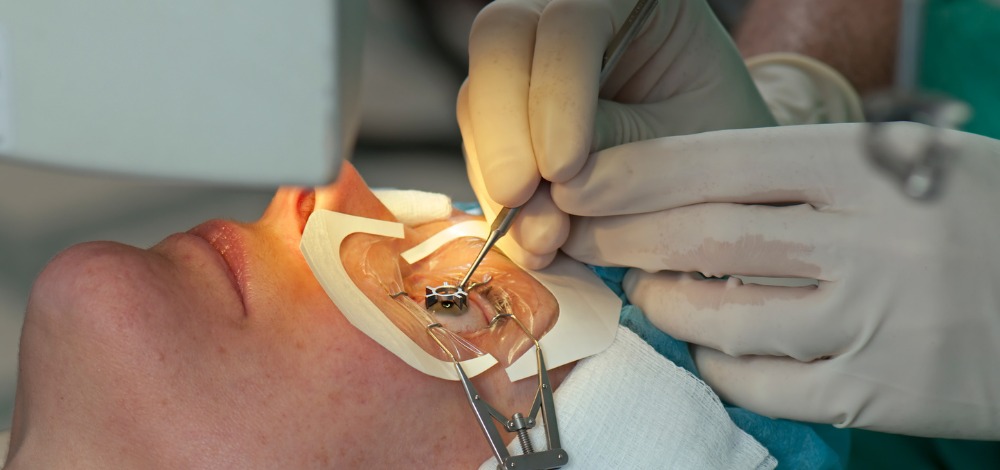
Areas around the eyes and eyelids are disinfected after a mild sedative and numbing eye drops are given
A speculum will be used to retract and hold the eyelid open during surgery
A thin flap is created using a femtosecond laser
The flap is lifted and an excimer laser is used to reshape the cornea based on the eye grade of the patient
The corneal flap is returned to its original position
There is a standard surgery process that eye surgeons follow to achieve a successful LASIK procedure. They usually start by numbing the eyes. Then, they create a flap using a precision laser. Afterwards, eye surgeons use another laser to reshape the surface of the eye. Lastly, they return the flap back in place.
Many choose to undergo LASIK surgery in the Philippines to obtain clear vision. While it is a permanent solution to your vision problems, there are different factors that affect the long-term clarity of your vision.
LASIK surgery is a permanent procedure because it removes corneal tissue to correct your vision. However, there are long-term and short-term effects after the LASIK procedure is done. For instance, after four to five hours post-surgery, you may already notice an improvement in your vision. In addition, after letting your eyes rest for a day or two, you can start to do your normal daily activities. As your eyes heal, your vision will continue to improve.
In the long term, changes in vision may happen as you age. When that happens, you can consult your eye doctor to see if you can undergo LASIK surgery again or confirm if there are other eye findings that need to be managed.
Some people are worried about the pain or discomfort they will feel during LASIK surgery. You should remember that the procedure is painless because of the eye-numbing drops, and the treatment is fast.
Usually, you will only feel a slight pressure on your eye as the LASIK machine docking system is put in place, but there is no pain at all. After the surgery, it is also normal to experience mild stinging in the eye or foreign body sensation. These are all expected side effects and will go away as your eyes heal.
More and more Filipinos are considering undergoing LASIK surgery as it is proven to give patients clear vision. Indeed, wearing eyeglasses and contact lenses can be tedious, especially when you have a high eye grade that keeps you from doing your work or enjoying leisure activities.
If you are curious about what happens before, during, and after the procedure, let Asian Eye Institute explain the process.
Not all people with refractive errors or blurry vision are automatically qualified to undergo LASIK surgery. First, you must get a LASIK screening to determine if your eye condition can be corrected by LASIK. Your doctor will do tests to check your overall eye health and determine if you are suitable to undergo the procedure.
You need to stop wearing soft contact lenses for five to seven days (one month if you are wearing hard contact lenses) before the LASIK screening. This will allow your cornea to go back to its most natural shape so that the screening tests can accurately assess your eye condition. If you are qualified, you will be scheduled for surgery and provided pre-operation instructions.
On the day of the surgery, expect to be at the clinic for two to four hours. Although the procedure is quite fast, you will need to rest in the recovery room afterwards and be monitored by the doctor to ensure successful healing.
As mentioned above, you will be given eye-numbing drops so you will not feel any pain during the surgery. If you are anxious or afraid, you may ask your doctor to prescribe you medicine to help ease any anxieties. Overall, just remember to relax during the process, listen to the instructions, and trust your eye surgeon to do what they do best.
After your surgery, the surgeon will check your eyes, and you will be asked to rest for a bit in the recovery room. The nurse will also provide post-surgery instructions and medication you will administer as part of the healing and recovery process. As the numbing eye drops wear off, expect to feel stinging, itching, and watery eyes. These are all side effects of the LASIK procedure and will go away over the next few days.
Your eye surgeon will also provide you with protective eyewear to shield your eyes from dust and keep you from rubbing your eyes. Once you go home, it is best to rest your eyes and not do anything that will strain your vision. Follow-up appointments will also be scheduled to monitor your healing over the next month and onwards.
LASIK surgery in the Philippines varies in cost, depending on the technology used and which doctor you prefer. At Asian Eye Institute, we use top-of-the-line diagnostic machines and lasers. We have various promos and partner privileges you can enjoy when you schedule LASIK screening and surgery with our eye surgeons. We also offer various payment methods for your convenience.
Everyone deserves to see the world clearly and perform everyday activities without depending on prescription glasses or contact lenses. By undergoing LASIK eye surgery in the Philippines with Asian Eye Institute, you can enjoy clear vision and live life to the fullest.
For questions and concerns about our services, you can contact our team of experts. If you want to schedule an appointment, you can simply visit our website and fill out the provided form.