
(02) 8-898-2020
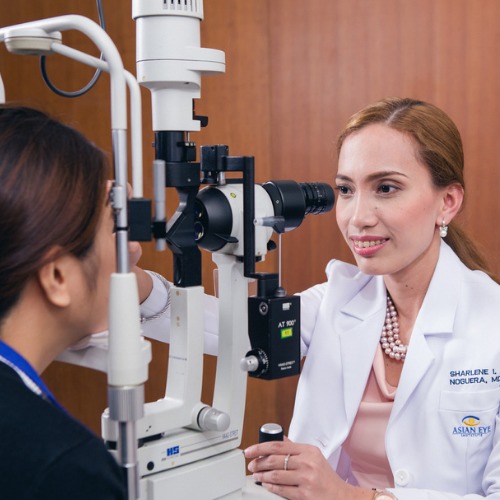
Like your skin, your eyes need sun protection, too!
The sun emits ultraviolet (UV) rays that can damage your eyes. These UV rays are not visible to the naked eye and are categorized into three types – the UVA, UVB and UVC.
Asian Eye Institute Cornea and External Disease Specialist Dr. Sharlene Noguera explains, “The UVC rays are the most damaging to the eyes, but luckily, it’s absorbed by the ozone layer. UVA rays pass through the cornea or the clear surface layer of the eye, which affect the lens and retina, while UVB rays affect the cornea and lead to growths on the eyes.”
“Prolonged and constant sun exposure raises the risk of developing eye conditions later in life,” she adds.
Some of the eye conditions you may develop include cataracts (the clouding of the natural lens of the eye), macular degeneration (the loss of central vision), skin cancer on your eyelids or around your eyes, eye “sunburn”, and pinguecula (a yellowish bump on the sclera or the white part of the eye).
However, the most common of all is ptergyium. Dr. Noguera explains, “Pterygium is a pink fleshy tissue that starts to grow on the sclera and slowly extends on the cornea. It can be red and very itchy. Sometimes, it feels as if there’s sand in your eyes and your eyes tear up excessively. As the pterygium grows, you may start having a hard time seeing. It can also distort the shape of your cornea, causing astigmatism.”
Astigmatism is a type of refractive error that happens when the cornea is irregularly shaped or uneven. People with astigmatism have blurry vision whether they’re looking at near or far objects.
“Pterygium is often called pugita because of the way it grows like a squid swimming across the eye,” she shares, “But the good news is that it can be removed through surgery. It may also re-develop if you continue to be exposed to UV rays, but we can do conjunctival autograft to lower the rate of recurrence.”
Dr. Noguera urges patients to protect their eyes to prevent the development of sun-related eye conditions. “This is very important, especially that the summer season is here. It’s best to consider where you’re going and what time you’re going out. Usually, the UV levels are higher in open spaces with reflective surfaces like water, sand and snow, and when the sun is high, which is from 10AM to 2PM.”
Make sure you wear 100% UV-protected eyewear, including sunglasses, eyeglasses and even contact lenses. “It should be able to block 100% of UV rays, so ask your eye specialist or purchase from a legitimate seller or shop. There are tests that can be done to make sure your lenses have UV protection.”
If you have any eye concerns, it’s best to consult your ophthalmologist for a comprehensive eye exam. During the pandemic, Asian Eye continues to serve patients at its clinics in Rockwell Center Makati, Trinoma, Mall of Asia and Commercenter Alabang. It also has a Teleconsultation Service, so you can talk to your doctor from the comfort of your home. Simply call 8-898-2020 or email [email protected] to set an appointment.
In need of UV-protected eyeglasses, sunglasses or eye medication? Shop at www.asianeyeshop.com. You can get help from Asian Eye experts and offers free nationwide delivery for a minimum purchase of Php2,000.
We deliver to all our patients the highest quality eye care on a par with the best in the world. We make high-quality eye care available and accessible to the Filipinos. We advance the science and practice of ophthalmology and optometry in Asia and the Pacific Rim.
HELPFUL LINKS
CONTACT US
0917-181-2020 /
0917-191-2020
(02) 8-898-2020
Monday – Friday
8:00 A.M to 5:00 P.M